
Jordan Peele's third feature — a sweeping, sun-scorched science fiction horror set on a remote California horse ranch. When the residents of a gulch witness something extraordinary and terrifying in the sky, they set out to capture proof on camera. Starring Daniel Kaluuya and Keke Palmer.
A Universal Pictures release, Nope was one of the most ambitious and inventive genre films of 2022 — combining large-scale spectacle with Peele's trademark psychological tension.
Future Associate contributed cloud work to this landmark production — art-directed sky additions across a sequence of driving shots, each requiring precise control over how the clouds read within Jordan Peele's carefully constructed visual language. Nope was the first project at Future Associate where the source material was shot on film.
/ The Clouds
In Nope, the clouds are not background dressing — they are the creature. Jean Jacket, the alien at the heart of the film, disguises itself within cloud formations, and its scientific name — Occulonimbus edoequus, "hidden dark cloud stallion-eater" — is encoded in what the sky looks like on any given shot. Jordan Peele described the sky as the primary VFX challenge of the film, and the production placed enormous emphasis on getting the clouds right. They needed to be present, atmospheric, and photographic — never digital-looking, never arbitrary.
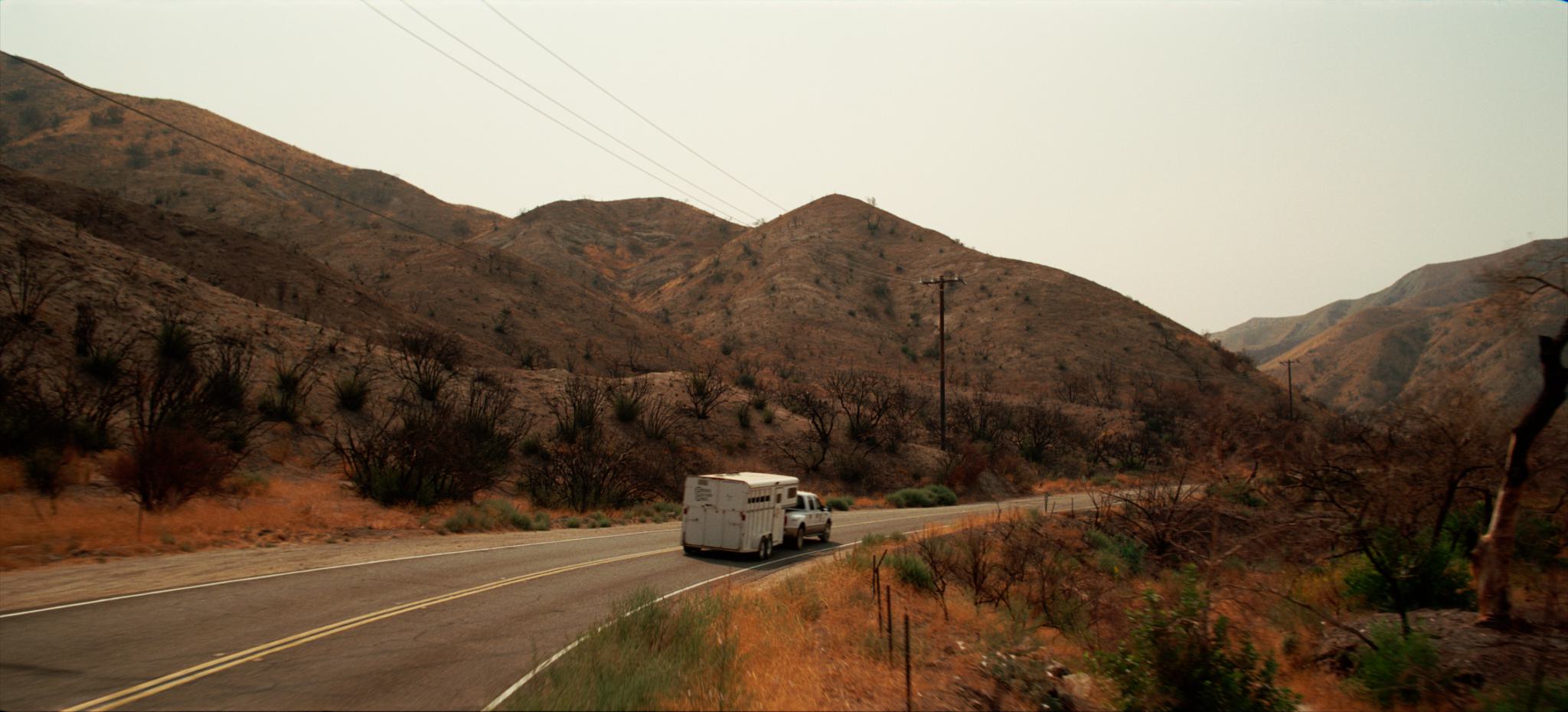
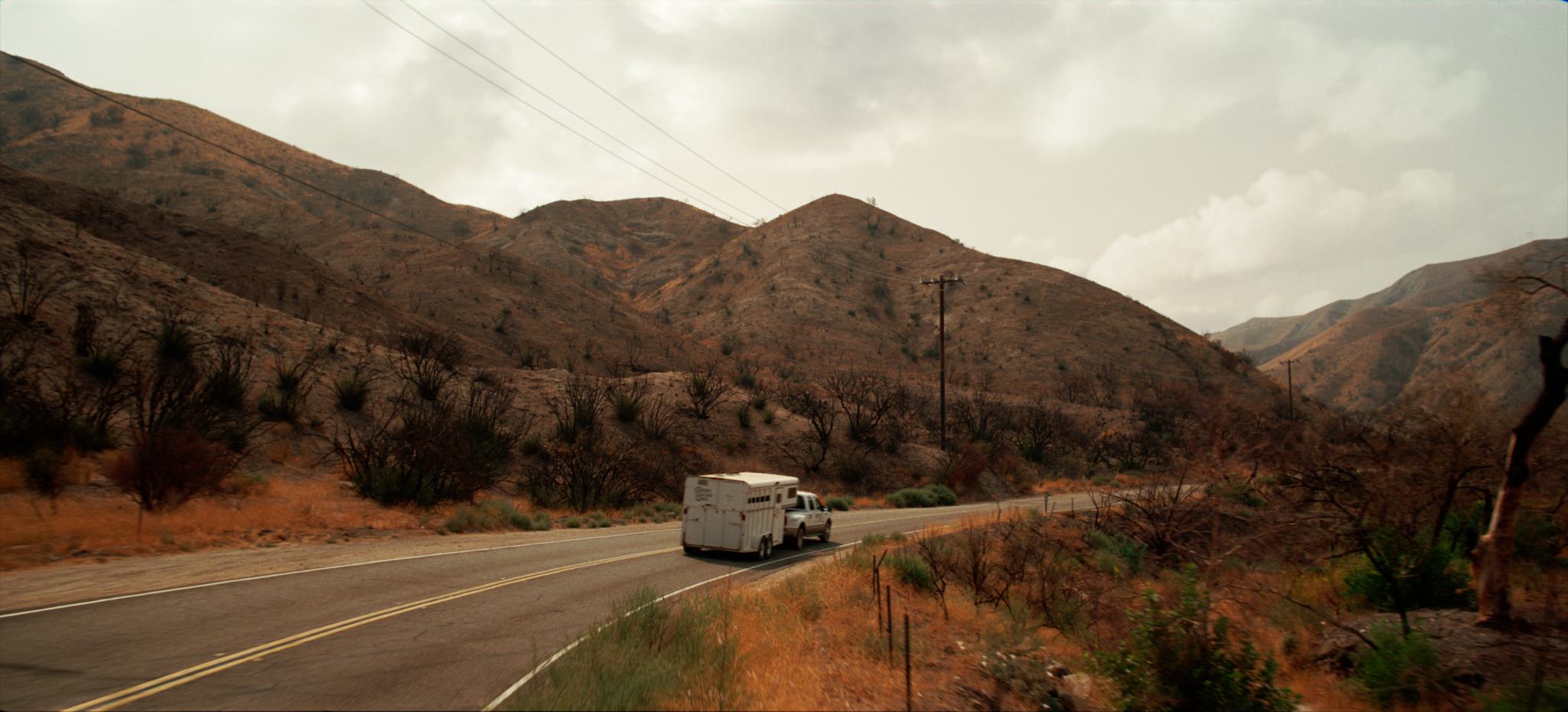 Before
After
Before
After
Our brief was to deliver precisely art-directed cloud additions across a sequence of driving shots. The filmmakers wanted detailed control over the read of the clouds in each setup — how dense, how formed, how close they felt — and our role was to give them that control in post, iterating through different skies and looks until each shot had exactly the presence the story required. Sometimes that meant something dramatic in the top third of the frame. Sometimes it was a subtler suggestion of cloud in an out-of-focus background. And in one shot, it was the clouds seen in reflection — glimpsed in a half-open passenger window, partially occluded, as if the sky outside is being quietly observed rather than directly confronted. Three very different reads, all requiring the same care.
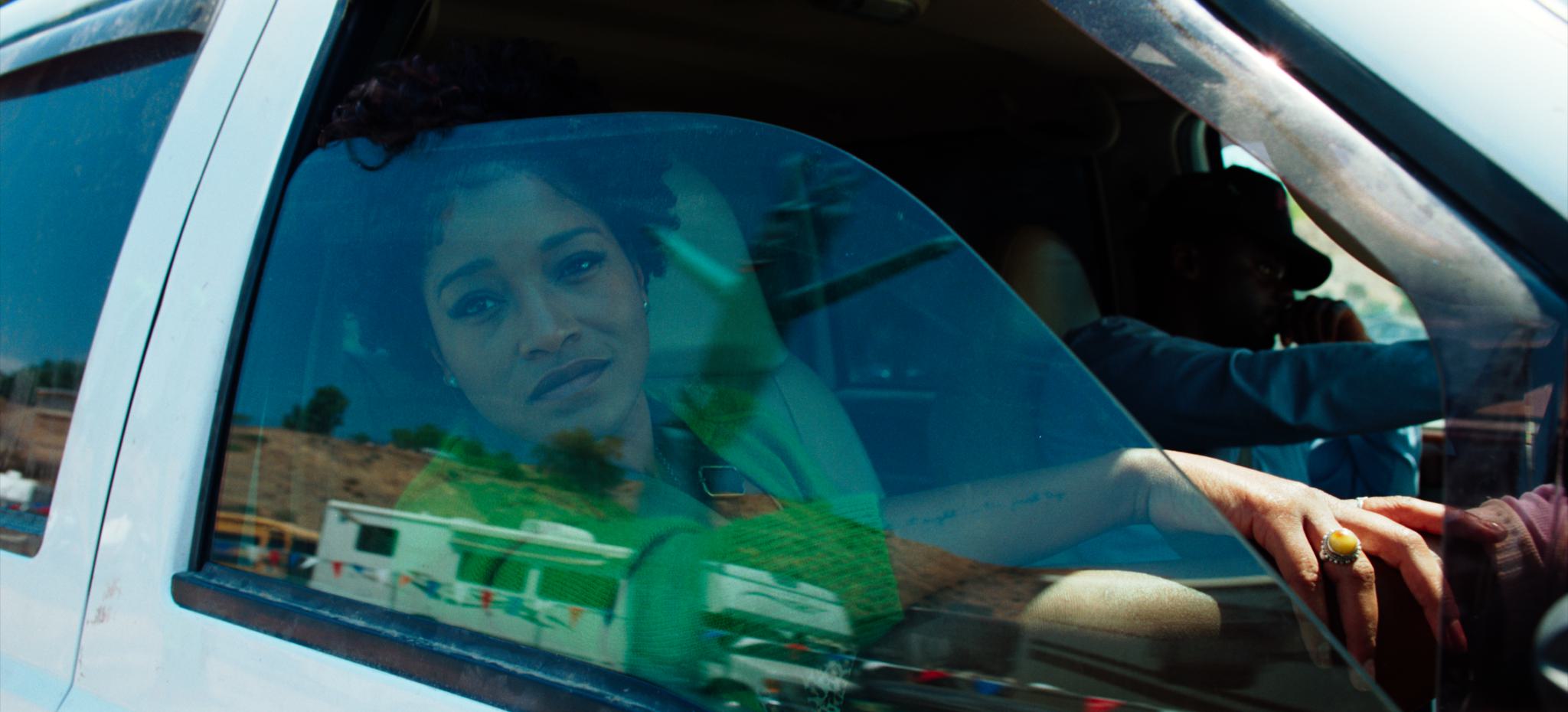
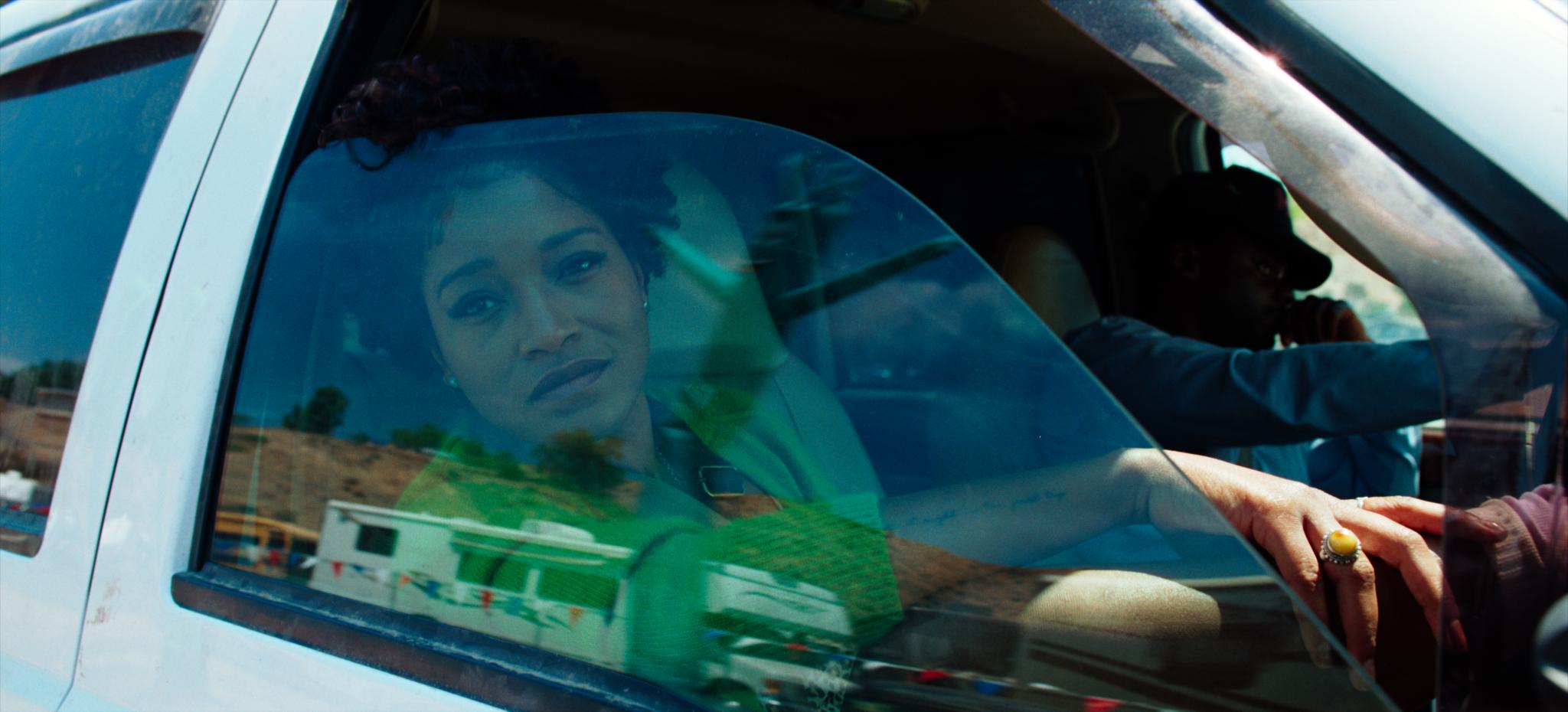 Before
After
Before
After
/ Film — A Different Pipeline
Nope was the first project at Future Associate where the source material was shot on film. That brought a pipeline we hadn't worked with before, starting with dust busting. Film negatives can carry tiny specks of dust that occlude light on the negative — when scanned, those specks invert into white hits that appear at random positions across the frame, and every frame is susceptible. Painting them out is a manual, frame-by-frame process that has to be done before any other work begins.
The negative was scanned at 8K. We downscaled those scans to 4K as our working and delivery format — giving us the resolution headroom of the original scan while keeping the pipeline manageable. The grain structure and tonal character of the film stock informed how we approached the cloud additions: to sit convincingly within a photochemical image, CG elements need to carry the same organic quality as the plate. Getting the clouds to feel truly photographic — rather than digitally sharp against a film-grain image — was as much a compositing discipline as it was a look development one.
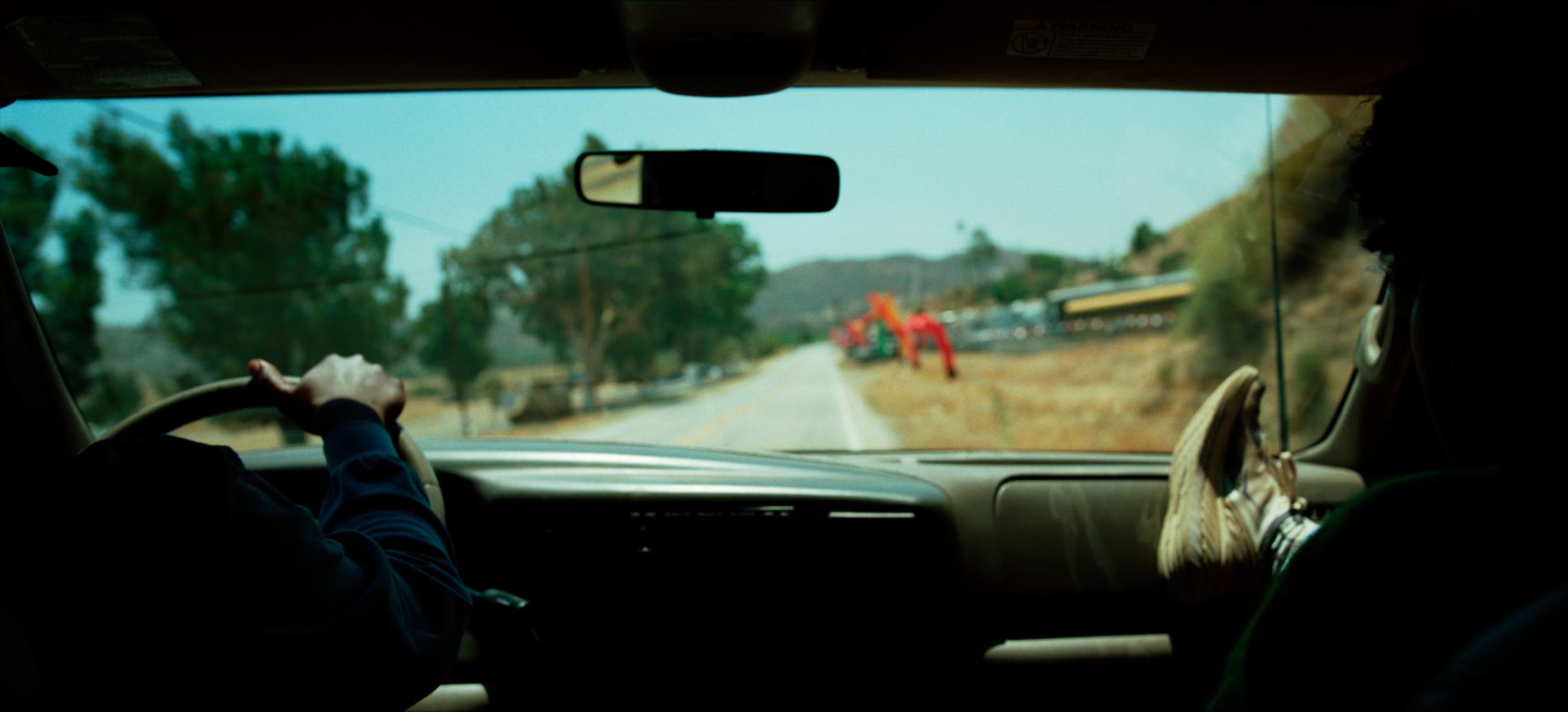
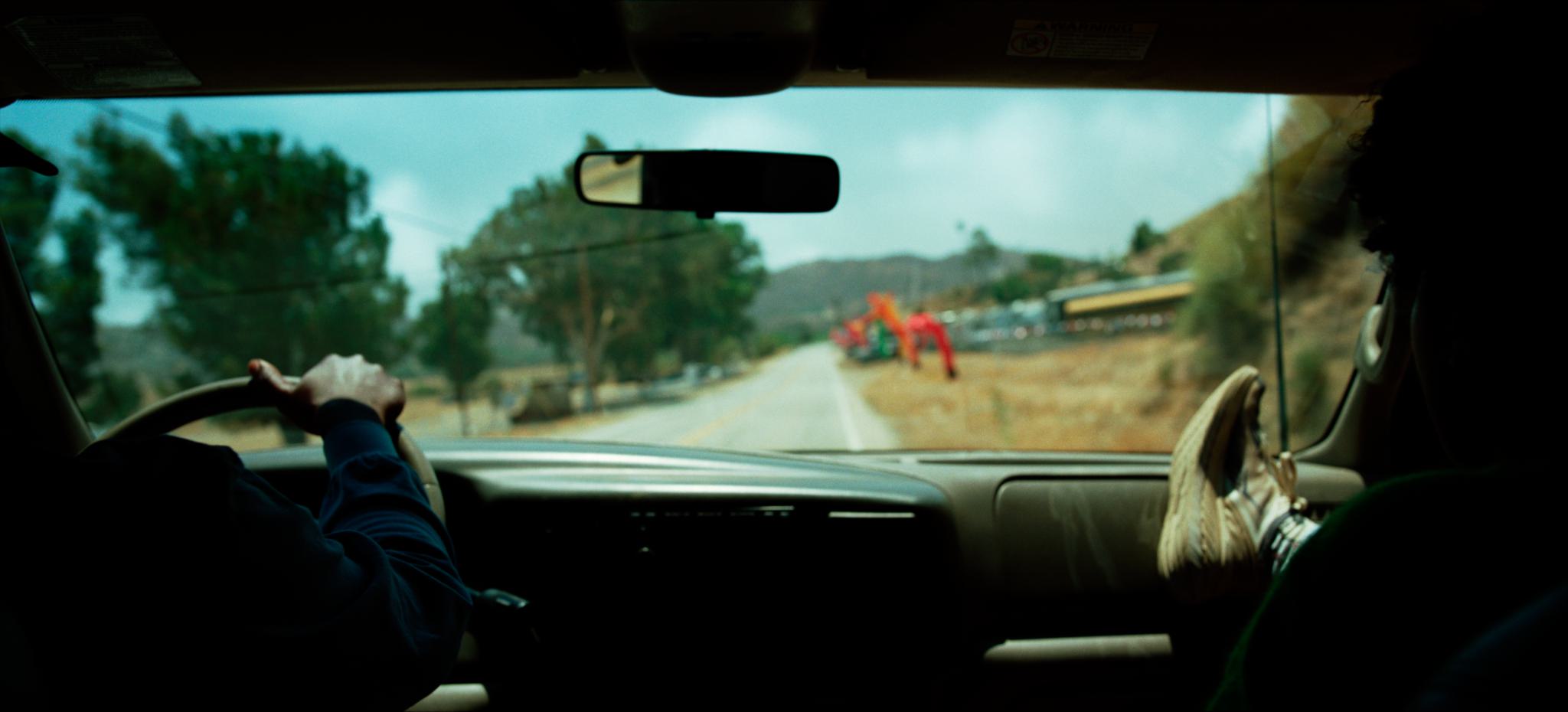 Before
After
Before
After